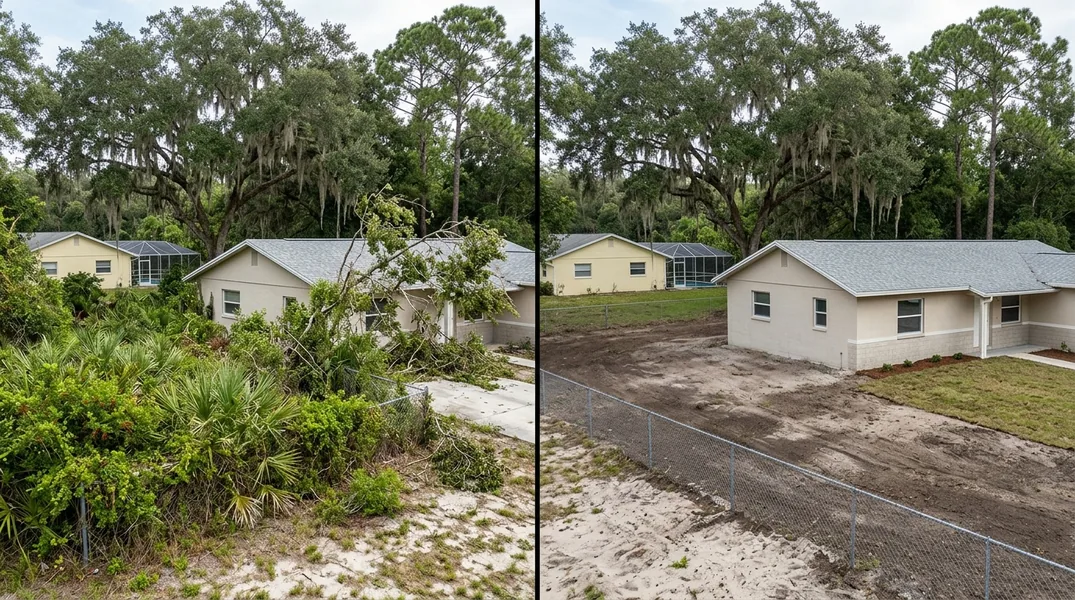
Why Hurricane Season Tree Prep Matters in Central Florida
Central Florida sits squarely in the path of Atlantic hurricane season, which officially runs from June 1 through November 30. While not every season brings a direct hit to Orlando, the threat is real enough that homeowners should take it seriously. Trees are often the first casualties in severe storms, and a poorly maintained tree can become a liability that damages your home, vehicle, or injures someone on your property.
The good news is that most hurricane damage to trees is preventable with proper planning and maintenance. By taking action now, before the official start of hurricane season, you give your landscape the best chance of surviving high winds, heavy rain, and storm surge intact. This proactive approach not only protects your property but can also reduce your insurance liability and save you thousands in emergency repairs and cleanup costs after a storm hits.
The Critical Role of Tree Trimming & Pruning in Storm Preparation
Professional Tree Trimming & Pruning is one of the most effective ways to reduce wind damage during hurricanes. When branches are overgrown, crossed, or rubbing against each other, they create weak points that snap easily under stress. A certified arborist removes dead wood, thins the canopy to reduce wind resistance, and eliminates branches that hang over your roof or power lines. This process, called crown thinning, allows wind to pass through the tree more easily rather than catching on dense foliage and creating dangerous leverage.
The timing of pruning is crucial. You want this work completed well before June 1 so that any fresh cuts have time to heal and the tree can enter hurricane season in optimal condition. Pruning too close to a storm leaves trees vulnerable, while pruning months in advance gives them the resilience they need. For homeowners in Orlando with large or multiple trees, hiring a professional service ensures the work is done safely and to industry standards. Improper pruning can actually weaken trees, so this is not a task to tackle with a chainsaw on your own.
Identifying and Removing Hazardous Trees Before Storm Season
Some trees are simply too risky to keep, especially as hurricane season approaches. Dead trees, those with significant lean, trees with large cavities or hollow sections, and species prone to splitting or uprooting should be evaluated immediately. A tree that has already survived one hurricane may be more vulnerable to the next one if it suffered internal damage or root stress. Signs of trouble include bare branches on one side, peeling bark, fungal growth, or branches that are already hanging precariously over your home.
If a hazardous tree is identified on your property, Tree Removal may be the safest option. This is not a decision to postpone until after a storm hits, because once hurricane-force winds arrive, removing a dangerous tree becomes exponentially more expensive and risky. Professional removal before June 1 is far more cost-effective than dealing with storm damage, cleanup, and potential liability claims. After removal, you can explore replanting with hurricane-resistant species that will serve your landscape for decades to come.
Choosing Wind-Resistant Trees for Long-Term Hurricane Protection
Not all trees are created equal when it comes to withstanding high winds. Some species have shallow root systems that make them prone to uprooting, while others have brittle wood that snaps under stress. If you are planning to plant new trees or replace ones you have removed, selecting wind-resistant varieties is a smart long-term investment. Live oaks, sand live oaks, and laurel oaks are excellent choices for Central Florida because they have deep root systems, flexible wood, and natural aerodynamic shapes that shed wind effectively. Slash pine, longleaf pine, and sweetbay magnolia are also solid options that thrive in Florida's climate while offering good storm resilience.
Conversely, trees to avoid or remove include water oaks, laurel oaks with weak crotches, and any species with shallow roots or dense, heavy canopies. The key is matching the right tree to your specific location, soil type, and sun exposure, then maintaining it properly throughout its life. A professional arborist can recommend species that will not only survive hurricanes but also enhance your property's beauty and value. Taking the time to plan your landscape with storm preparedness in mind is far easier than replanting after a hurricane has uprooted half your trees.
Storm Prep Tree Service Near Me: When to Call Orlando Tree Service
If you are unsure about the condition of your trees or uncertain whether they need pruning, removal, or replacement, now is the time to call in the experts. Orlando Tree Service offers professional storm prep assessments and can handle everything from routine pruning to complete tree removal. Our certified arborists will evaluate your property, identify potential hazards, and recommend a customized plan to protect your home before hurricane season arrives. We understand the unique challenges that Central Florida homeowners face, and we are committed to helping you prepare safely and efficiently.
Waiting until June 1 or later means you risk being unable to get an appointment before the season officially begins. Many homeowners wait until after a storm to call for help, which is why emergency services become overbooked and expensive. By scheduling your free estimate now, you ensure that your trees are ready when the first tropical system appears on the radar. Contact Orlando Tree Service at (321) 320-6352 or visit our website to request a free estimate today. Our team is ready to help you protect your property and give you peace of mind heading into hurricane season.
Creating Your Pre-Hurricane Tree Maintenance Checklist
A practical approach to hurricane prep is to create a simple checklist for your property. Start by walking around your home and identifying all mature trees, noting their species, size, and proximity to structures. Look for dead branches, signs of disease or pest damage, and any limbs that hang over your roof, driveway, or power lines. Next, assess the overall health and structure of each tree. Does it have a strong central leader, or does it split into multiple weak crotches? Are there cavities, cracks, or areas where bark is missing? Document any concerns with photos so you can share them with a professional if needed.
Once you have your list, prioritize the work. Trees that pose the greatest risk to your home should be addressed first, followed by those that are already showing signs of stress or disease. Schedule pruning and removal services before the end of May to ensure everything is complete before June 1. After the work is done, maintain your trees throughout the year with regular inspections and minor pruning as needed. This ongoing commitment to tree health is far less expensive than emergency repairs and provides the best protection for your property during hurricane season and beyond.
Looking for a professional tree service in Orlando? Orlando Tree Service responds fast for all your tree service needs.
Get a Free QuoteOur services: Tree Removal · Tree Trimming & Pruning · Stump Grinding