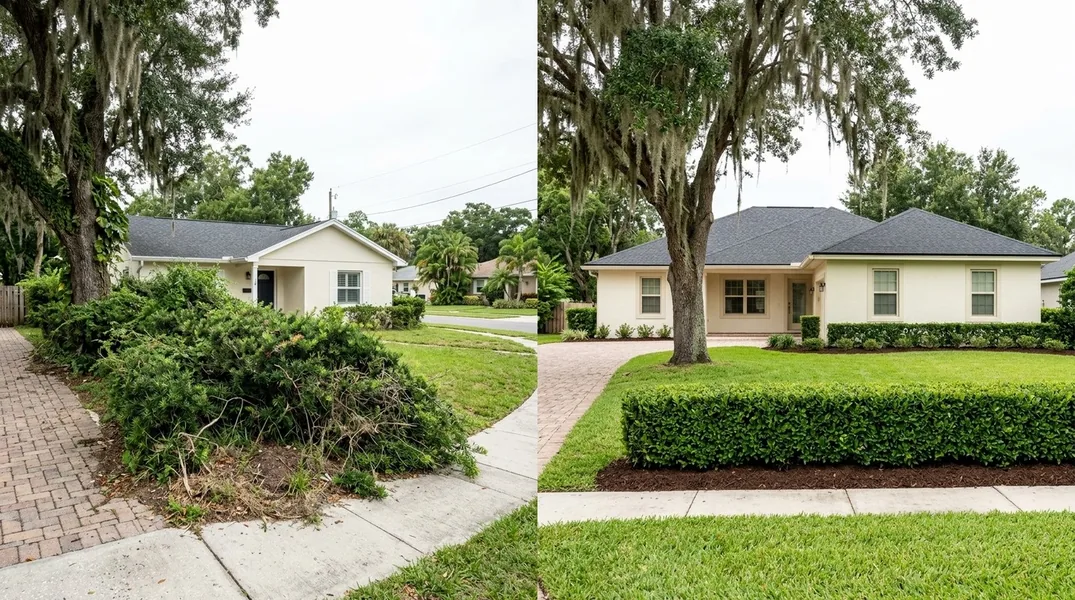
Understanding the Difference Between Tree Trimming and Removal
When you're facing a problem tree on your property in Orlando, the first question homeowners ask is simple: can this tree be saved, or does it need to go? The answer depends on understanding the fundamental difference between Tree Trimming & Pruning and Tree Removal.
Tree Trimming & Pruning is a restorative practice designed to improve a tree's health, appearance, and safety. When an arborist trims your tree, they're selectively removing branches to enhance structural integrity, reduce disease risk, and promote new growth. This is preventative maintenance that can extend a tree's life by decades. In contrast, Tree Removal is the complete extraction of a tree from your property. This becomes necessary when a tree is beyond saving, poses an immediate safety hazard, or is causing damage to your home's foundation or utilities.
For most homeowners in Orlando, the goal is always to preserve trees when possible. Our Central Florida oaks, pines, and cypress trees are valuable assets that provide shade, improve air quality, and increase property value. However, knowing when to trim and when to remove is critical for both your safety and your landscape's long-term health.
Signs Your Tree Can Be Saved with Proper Trimming
Many trees that appear problematic can actually be restored to health through strategic Tree Trimming & Pruning. If your oak or other tree shows these signs, professional trimming is likely the right solution. Dead or diseased branches that haven't yet affected the entire tree can be removed to prevent the spread of infection. Crossing or rubbing branches that create wounds and weak points respond well to selective pruning. Trees with dense canopies that block sunlight from reaching your home or lawn often benefit dramatically from thinning, which improves air circulation and reduces disease risk.
Trees that have grown too close to your roof, power lines, or neighboring properties are excellent candidates for trimming rather than removal. A skilled arborist can reshape the tree's crown to create safe clearance while maintaining the tree's natural form and structural integrity. Trees showing signs of storm damage, such as broken limbs or torn bark, can often be salvaged if the main trunk and primary branches remain intact. Even trees with minor pest infestations or early-stage fungal issues can frequently be saved through proper pruning that improves the tree's vigor and natural defense mechanisms.
The key indicator that trimming will work is that the tree's core structure is sound. If the trunk is straight and healthy, if the tree has good branch attachment angles, and if the damage is localized rather than systemic, professional pruning can restore your tree to years of productive life. This is why a professional free estimate is so valuable. An experienced arborist can assess whether your tree's problems are fixable or if removal is truly necessary.
When Removal Is the Only Safe Option: Hazard Tree Assessment Orlando
Not every tree can or should be saved. A hazard tree assessment in Orlando determines whether a tree poses an unacceptable risk to your family, home, or neighboring properties. Several conditions indicate that Tree Removal is necessary rather than trimming. A tree with a split or cracked trunk cannot be repaired, as the structural integrity is permanently compromised. Trees that are dead or dying throughout their entire canopy, showing no green growth and hollow or soft wood, have no chance of recovery and will eventually fall.
Severe root damage or root rot that undermines the tree's stability is another clear indicator for removal. If a tree is leaning significantly or has lifted soil around its base, it may topple during the next strong storm. Trees with extensive cavities or hollow sections lose their structural strength and become unpredictable. A tree growing at an odd angle, especially if it's growing toward your house or over a high-traffic area, becomes increasingly dangerous as it matures and gains weight in the canopy.
Pest infestations that have spread throughout the tree's vascular system, such as advanced borer damage or severe scale infestations, often cannot be reversed through trimming alone. If your tree has been struck by lightning, shows signs of disease like canker or anthracnose that has girdled major branches, or is competing with your home's foundation or septic system, removal may be the most practical solution. The presence of multiple serious problems (disease plus structural weakness plus storm damage, for example) tips the scale toward removal, as the cost and effort of trimming may not justify the tree's remaining lifespan.
The Professional Evaluation Process: What to Expect
The best way to determine whether your tree needs trimming or removal is to request a professional evaluation. When you contact Orlando Tree Service at (321) 320-6352, our certified arborists will conduct a thorough assessment of your tree's health and structural condition. This evaluation examines the trunk for cracks, cavities, or signs of disease. We inspect the branch structure for proper attachment angles, dead wood, and crossing limbs. We assess the tree's root collar and surrounding soil for signs of root damage or disease.
During a hazard tree assessment, we also consider your tree's location and potential impact zone. A tree that might be acceptable in an open field becomes a liability if it overhangs your bedroom or threatens power lines. We evaluate the tree's age, species, and growth rate to estimate its remaining productive lifespan. We look for signs of pest activity, fungal growth, or disease progression. This comprehensive evaluation allows us to give you an honest recommendation: can this tree be saved with professional trimming, or is removal the safer and more cost-effective choice?
The evaluation process is transparent and educational. We'll explain what we found, why we're making our recommendation, and what the next steps look like. Whether the answer is trimming or removal, we want you to understand the reasoning behind it. This is why we always encourage homeowners to get a free estimate before making any decisions about their trees.
Tree Removal Cost in Orlando: What to Budget
The pricing for tree removal in Orlando varies based on several factors. The size of the tree is the primary cost driver, with larger oaks and pines requiring more equipment, labor, and time. Tree location matters significantly. A tree growing in an open yard is far less expensive to remove than one growing close to your house, power lines, or a neighbor's fence, which requires careful rigging and specialized equipment. The tree's health also affects pricing. A healthy tree with strong wood requires more cutting time, while a dead or brittle tree may be faster to remove but more dangerous to work with.
Additional services like Stump Grinding add to the total cost but are often worth the investment, as stumps can be tripping hazards, harbor pests, and complicate future landscaping plans. Debris removal and hauling also factor into the final bill. Most tree removal companies in Orlando charge between several hundred to several thousand dollars depending on these variables. Trimming, by contrast, is typically less expensive than removal, making it an attractive option when your tree can be saved.
The best way to understand what your specific situation will cost is to request a free estimate from Orlando Tree Service. We'll assess your tree, explain the work involved, and provide transparent pricing so you can make an informed decision. There are no surprises, and no obligation.
Making Your Decision: Trimming, Removal, or Emergency Service
Deciding between tree trimming and removal doesn't have to be stressful if you have the right information and professional guidance. Start by asking yourself: Is the tree healthy overall, or is it showing signs of decline? Is the problem localized to a few branches, or is it systemic? Is the tree in a location where it poses a safety risk? Does it provide value to my property, or is it causing problems? These questions will help guide your thinking, but a professional arborist's assessment is always the most reliable way to decide.
If you're facing an immediate safety threat, such as a tree that's partially fallen, a tree that's leaning dangerously, or a tree that's been damaged by recent storms, don't wait. Contact Orlando Tree Service for Emergency Tree Service at (321) 320-6352. Our team responds quickly to dangerous situations to protect your family and property. For non-emergency situations, schedule a consultation at your convenience to explore whether trimming can save your tree or whether removal is the best path forward.
Remember, the goal is always to preserve healthy trees while removing those that pose risks or are beyond saving. Our team at Orlando Tree Service has the expertise to make that distinction and to execute whatever solution your tree needs. Call us today at (321) 320-6352 or request a free estimate to get started.
Looking for a professional tree service in Orlando? Orlando Tree Service responds fast for all your tree service needs.
Get a Free QuoteOur services: Tree Removal · Tree Trimming & Pruning · Stump Grinding